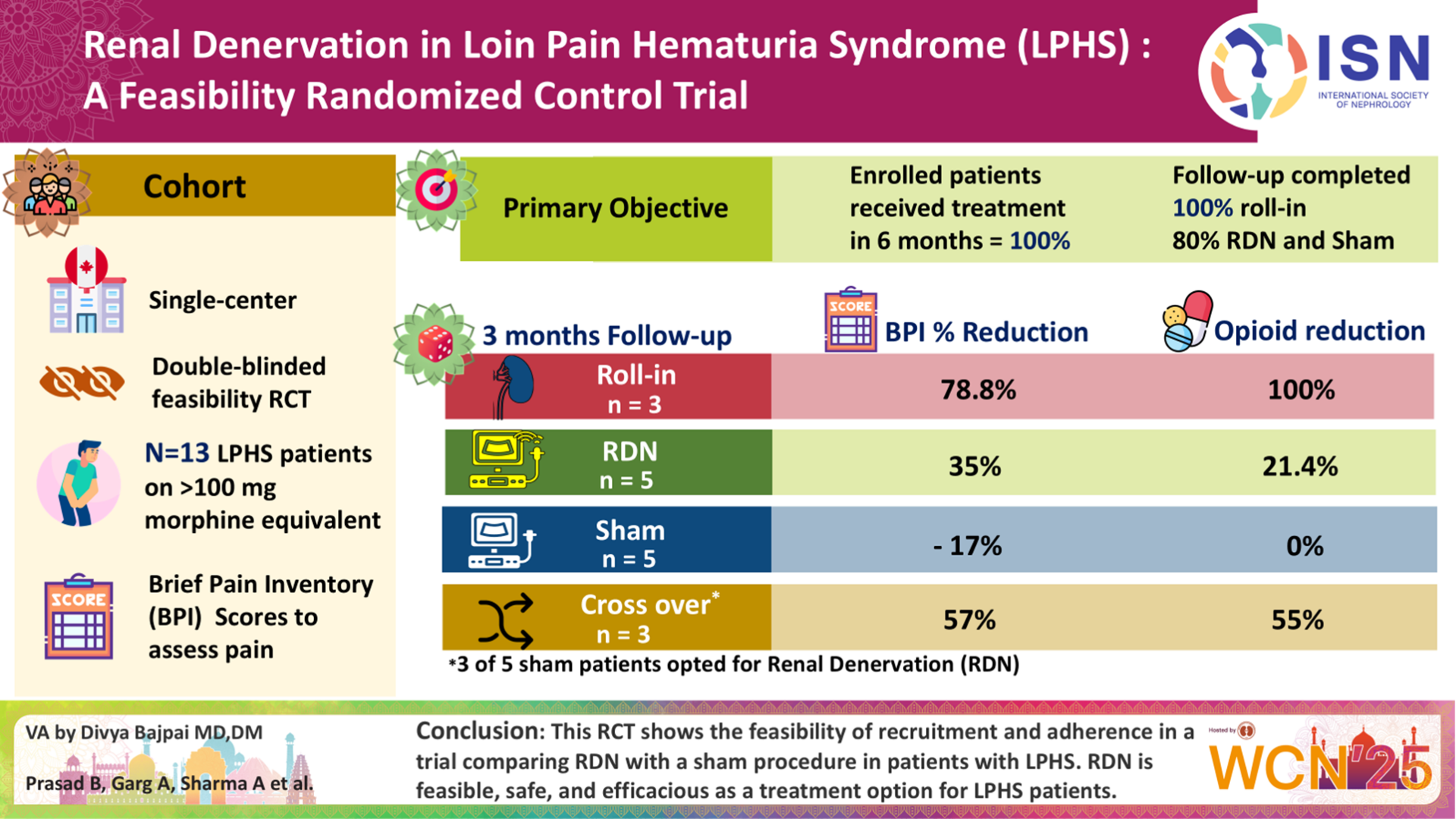
An expanded clinical evaluation of renal denervation (RDN) in patients with Loin Pain Hematuria Syndrome (LPHS) was conducted in 2018, building upon the initial feasibility findings reported in earlier investigations. This study aimed to further assess the efficacy, safety, and reproducibility of RDN in a larger and more diverse patient cohort presenting with chronic, treatment-resistant loin pain.
The study population consisted of twelve patients, including eleven women and one male, with an age range of 21 to 62 years. All participants had a confirmed diagnosis of LPHS, characterized by persistent severe loin pain in conjunction with unexplained hematuria, and had previously undergone extensive clinical evaluation to exclude alternative etiologies.
The primary objective of the study was to evaluate whether RDN could achieve a clinically significant reduction in pain, defined as a ≥30% decrease in self-reported pain scores at six months post-procedure. Pain severity was assessed using the McGill Pain Questionnaire, a validated instrument widely utilized in chronic pain research.
The intervention was performed using an endovascular, catheter-based renal denervation system (Vessix), designed to deliver controlled thermal energy to the periarterial adventitia of the renal arteries. This approach enables targeted disruption of both afferent sensory nerve fibers responsible for pain transmission and efferent sympathetic fibers involved in renal neuroregulation.
In addition to pain assessment, the study incorporated a comprehensive evaluation of secondary outcome measures, including functional disability, psychological well-being, and overall quality of life. These parameters were measured using standardized tools such as the Oswestry Disability Index, Geriatric Depression Scale, and quality-of-life instruments including EQ-5D and SF-36.
The results of the study demonstrated substantial and consistent improvements across primary and secondary outcome measures. At the three-month follow-up, ten out of twelve patients reported a significant reduction in pain severity. By the six-month evaluation, eleven out of twelve patients achieved the predefined target of ≥30% pain reduction, indicating a high rate of therapeutic response.
These findings were supported by quantitative improvements in validated pain scores, confirming the effectiveness of RDN in reducing chronic nociceptive input in LPHS patients. The magnitude and consistency of pain reduction observed in this study further reinforced the clinical relevance of renal nerve modulation.
In addition to pain relief, patients experienced notable improvements in functional and psychological outcomes. Scores on the Oswestry Disability Index indicated a reduction in physical limitations, while improvements in the Geriatric Depression Scale suggested a positive impact on emotional well-being. Quality-of-life assessments, including EQ-5D and SF-36, demonstrated broad enhancements in daily functioning and overall health perception.
The procedure was well tolerated across the study population, with no significant procedural complications reported. The minimally invasive nature of the endovascular technique, combined with its favorable safety profile, supports its application as a viable alternative to more invasive surgical interventions in carefully selected patients.
Importantly, the outcomes of this expanded case series provided stronger evidence for the reproducibility of RDN effects in LPHS, addressing some of the limitations associated with smaller preliminary studies. The consistent response observed across a larger cohort supports the hypothesis that renal nerve pathways play a central role in the pathogenesis of LPHS-related pain.
However, as with all non-randomized studies, certain limitations must be acknowledged. These include the absence of a control group, potential selection bias, and the relatively limited sample size. As such, while the findings are highly encouraging, they underscore the need for randomized controlled trials to establish definitive evidence of efficacy and long-term outcomes.
In conclusion, the 2018 expanded clinical study represents a significant advancement in the investigation of renal denervation as a therapeutic strategy for LPHS. The observed improvements in pain, functional capacity, and psychological well-being highlight the multidimensional benefits of this intervention.
These findings contribute to the growing body of evidence supporting RDN as a mechanism-based, minimally invasive treatment option for patients with refractory LPHS. Furthermore, they provide a strong foundation for future research aimed at optimizing patient selection and integrating RDN into evidence-based clinical practice.